Anorexic BMI Calculator – Accurate BMI Assessment
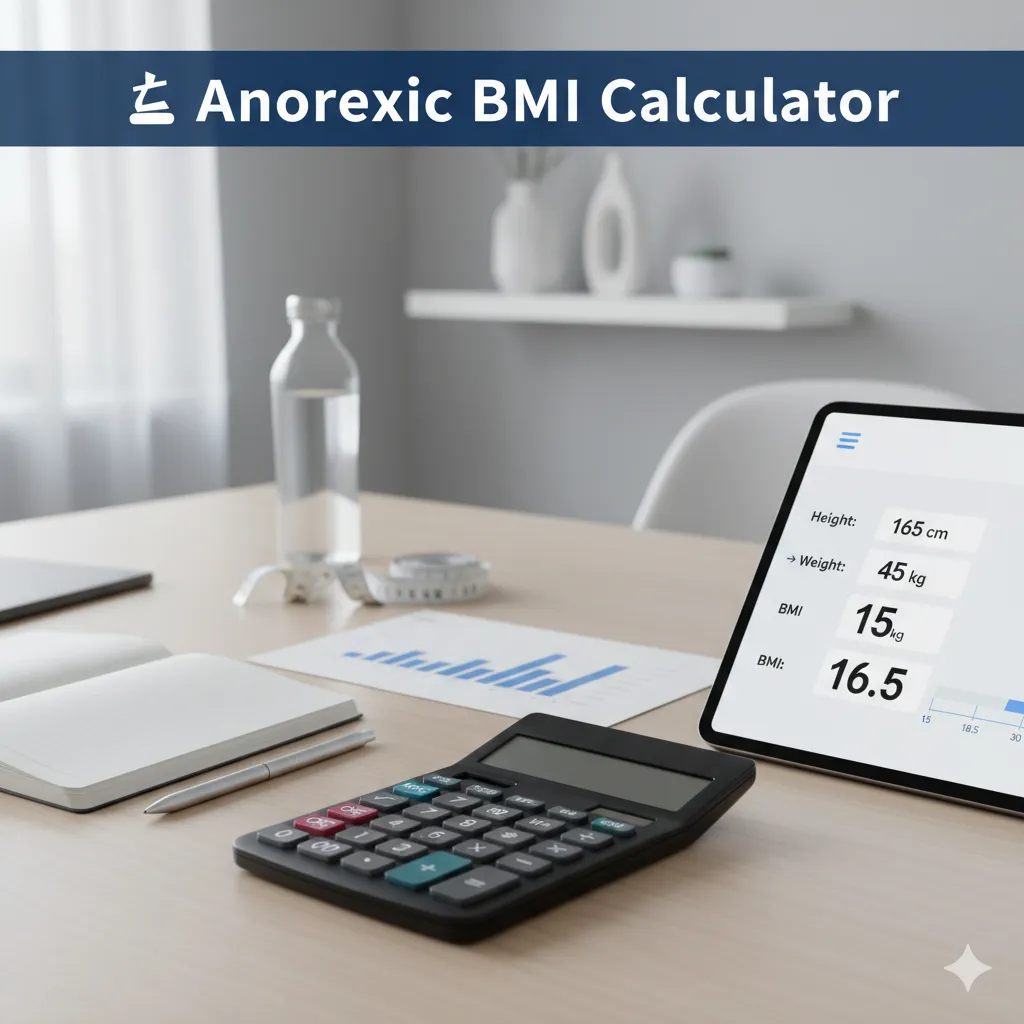
Anorexic BMI Calculator
Calculate your Body Mass Index and assess anorexia risk
Your BMI Result
—
BMI Categories
| BMI | Category | Risk |
|---|---|---|
| Below 15.0 | Severe Anorexia | Critical Risk |
| 15.0 – 15.9 | Moderate Anorexia | Very High Risk |
| 16.0 – 16.9 | Mild Anorexia | High Risk |
| 17.0 – 18.4 | Underweight | Medium Risk |
| 18.5 – 24.9 | Normal weight | Low Risk |
| 25.0 – 29.9 | Overweight | Enhanced Risk |
| Above 30.0 | Obese | High Risk |
Anorexic BMI Calculator – Accurate BMI Assessment
Body Mass Index (BMI) is a widely used measure to assess body weight relative to height. For individuals with extreme low body weight, such as those suffering from anorexia, BMI can help evaluate health risks and monitor progress. The Anorexic BMI Calculator provides a quick and accurate way to calculate BMI and determine whether the weight falls within the anorexic range.
Why BMI Assessment is Important for Anorexia
- Health Monitoring: Identifies dangerously low body weight that may affect organs and overall health.
- Early Intervention: Helps doctors and caregivers take timely action.
- Progress Tracking: Enables patients and professionals to monitor recovery.
- Education: Raises awareness about the health risks of anorexia.
BMI Formula
BMI is calculated using the following formula:
BMI = Weight (kg) / (Height (m))²
Or in pounds and inches:
BMI = (Weight (lb) × 703) / (Height (in))²
BMI Categories
| BMI Range | Category |
|---|---|
| < 16.0 | Severely underweight (Anorexic) |
| 16.0 – 18.4 | Underweight |
| 18.5 – 24.9 | Normal weight |
| 25.0 – 29.9 | Overweight |
| ≥ 30 | Obese |
Step-by-Step Example: Calculate Anorexic BMI
Problem: A person weighs 38 kg and is 1.65 meters tall. Determine their BMI.
Formula: BMI = Weight / (Height)²
Solution: BMI = 38 / (1.65 × 1.65) = 38 / 2.7225 ≈ 13.95
Interpretation: BMI < 16 → Severely underweight (Anorexic)
Step-by-Step Example: Using Pounds and Inches
Problem: A person weighs 80 lb and is 65 inches tall. Determine their BMI.
Formula: BMI = (Weight × 703) / (Height)²
Solution: BMI = (80 × 703) / (65 × 65) = 56240 / 4225 ≈ 13.31
Interpretation: BMI < 16 → Severely underweight (Anorexic)
FAQs – Anorexic BMI Calculator
1. What is BMI?
Body Mass Index (BMI) is a number calculated from weight and height to categorize weight status.
2. What BMI range indicates anorexia?
BMI less than 16 is considered severely underweight and may indicate anorexia.
3. Is BMI the only measure for anorexia?
No, BMI is one indicator. Diagnosis also considers medical evaluation, eating habits, and mental health.
4. Can I use this calculator at home?
Yes, it is a simple tool for awareness and tracking, but always consult a medical professional for health decisions.
5. Does age affect BMI interpretation?
BMI ranges may differ for children, adolescents, and elderly. This calculator is primarily for adults.
6. Can I use pounds and inches?
Yes, the formula BMI = (Weight × 703) / (Height)² works with pounds and inches.
7. Can BMI alone diagnose anorexia?
No, it is an indicator. Clinical evaluation is required for proper diagnosis.
8. How often should I check BMI?
For monitoring, weekly or monthly tracking is sufficient, depending on medical guidance.
9. Can extremely low BMI be dangerous?
Yes, a BMI below 16 increases risk of organ failure, malnutrition, and other health complications.
10. Is this calculator free and easy to use?
Yes, it is completely free and designed for quick, accurate assessments.