BMI Calculator – Calculate Your Body Mass Index Easily
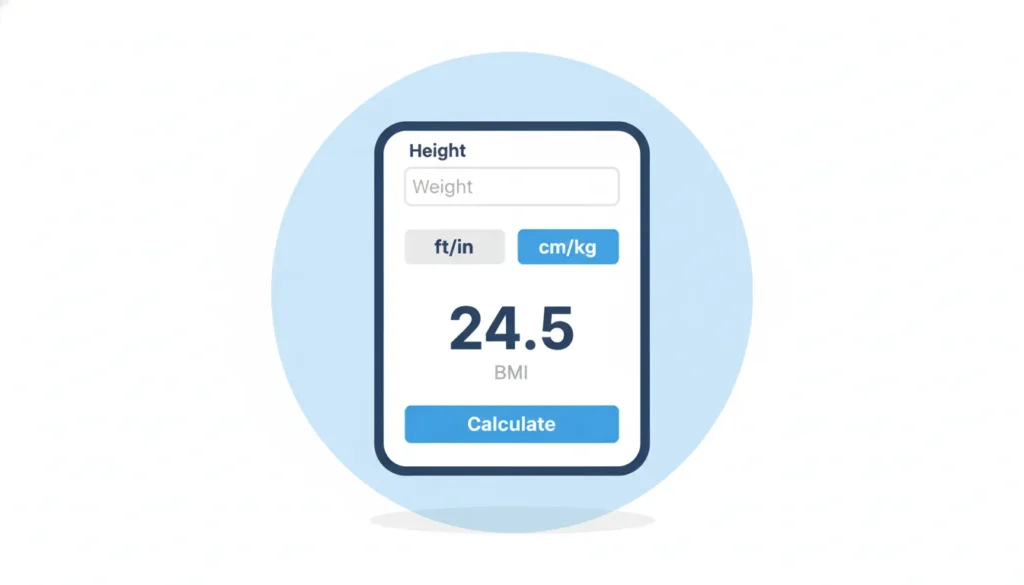
Body Mass Index (BMI) Calculator
Select BMI Calculator – Calculate Your Body Mass Index Easily
Body Mass Index (BMI) is a simple screening tool that relates weight to height to indicate whether an individual has a healthy body weight for their height. The Select BMI Calculator lets users quickly compute BMI using metric or imperial units and provides an interpretation based on commonly used BMI categories.
Why BMI Matters
- Quick screening: Identifies underweight, healthy weight, overweight, and obesity categories for population-level and clinical screening.
- Risk indicator: Higher BMI is associated with increased risk of cardiovascular disease, diabetes, and some cancers (though BMI doesn't measure body fat distribution).
- Monitoring: Useful for tracking weight-change trends over time in combination with other measures (waist circumference, body composition).
- Accessible: Requires only height and weight — no special equipment.
Who This Calculator Is For
Adults and older adolescents who want a quick estimate of body mass status. BMI should be interpreted cautiously in children (use age/sex-specific percentiles), athletes, pregnant people, and those with atypical muscle mass or body composition.
Key Parameters
- Weight (kilograms or pounds)
- Height (meters/centimetres or feet/inches)
- Unit system selection (Metric or Imperial)
BMI Formula
Metric:
BMI = weight (kg) / [height (m)]²
Imperial:
BMI = 703 × weight (lb) / [height (in)]²
BMI Categories (Adult)
- Underweight: BMI < 18.5
- Normal (healthy weight): BMI 18.5 – 24.9
- Overweight: BMI 25.0 – 29.9
- Obesity class I: BMI 30.0 – 34.9
- Obesity class II: BMI 35.0 – 39.9
- Obesity class III (severe): BMI ≥ 40.0
Step-by-Step Example (Metric)
Problem: Calculate BMI for a person weighing 72 kg and 1.75 m tall.
Step 1 — Apply formula:
BMI = 72 ÷ (1.75 × 1.75) = 72 ÷ 3.0625 = 23.5
Interpretation: BMI 23.5 → Normal (healthy weight).
Step-by-Step Example (Imperial)
Problem: Weight = 160 lb, Height = 69 in.
Step 1 — Apply formula:
BMI = 703 × 160 ÷ (69 × 69) = 112,480 ÷ 4,761 = 23.6 → Normal.
How the Calculator Works (User Flow)
- Select unit system: Metric (kg/m) or Imperial (lb/in).
- Enter weight and height.
- Click "Calculate" — the tool computes BMI with the appropriate formula and displays the BMI value and category.
- Optional: view tips for healthy weight, convert units, or track historical BMI results.
Limitations & Important Considerations
- BMI is an indirect measure of body fat and does not distinguish between fat and lean (muscle) mass.
- It does not reflect fat distribution (e.g., central/abdominal adiposity), which affects health risk.
- Interpret BMI cautiously in athletes, very muscular individuals, the elderly with low muscle mass, and pregnant people.
- For children and adolescents, use BMI-for-age percentiles rather than adult cutoffs.
- Combine BMI with other measures (waist circumference, blood pressure, lipids, glucose) for a fuller health assessment.
Practical Tips
- Measure height without shoes and weight in light clothing for best accuracy.
- Track BMI trends over weeks/months rather than focusing on single-day variation.
- Small BMI changes can reflect meaningful shifts in health when combined with behavior changes and clinical markers.
FAQs – BMI Calculator
1. Is BMI a diagnostic tool?
No — it is a screening tool. Further assessment (dietary evaluation, body composition, labs) is needed for diagnosis and management.
2. What BMI is healthiest?
Population-based evidence suggests the 18.5–24.9 range is associated with lower average risk for many diseases, but individual health varies.
3. Can I use BMI to set weight goals?
Yes — BMI can help set target ranges, but goals should be individualized and consider body composition, functional status, and personal preferences.
4. How often should I calculate BMI?
For monitoring, monthly or quarterly checks are common; more frequent checks may show normal short-term fluctuations.
5. Should athletes worry about BMI?
Athletes often have higher muscle mass leading to higher BMI without excess fat — use body composition testing or waist circumference in addition.
6. What about older adults?
In older adults, BMI may underestimate body fat due to loss of muscle mass; focus also on strength, function, and nutrition.
7. Does ethnicity affect interpretation?
Yes — some populations experience health risks at lower or higher BMIs; clinicians may use ethnicity-specific considerations when available.
8. Can I convert between units in the tool?
Yes — this calculator supports metric and imperial units and converts values internally when needed.
9. Is waist circumference important?
Yes — waist circumference provides information about abdominal fat and cardiometabolic risk beyond BMI.
10. Is this medical advice?
No. The BMI calculator provides an estimate for informational use. For personalised health advice, consult a healthcare professional.
Quick Disclaimer
The BMI Calculator offers an estimate of body mass index and category for educational and screening purposes only. It is not a substitute for professional medical evaluation, diagnosis, or personalized treatment.